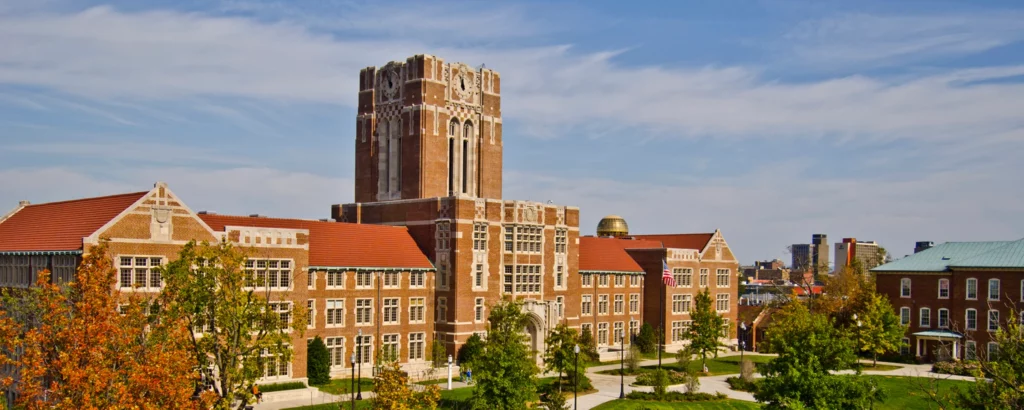
After 13 years as Head of the
mathematics department at UT and a three
year stint at the National Science Foundation where I was on loan from
UT, I retired from the university. I have not retired, however, from
Mathematics. Besides remaining active in the profession and interested
in several research and scholarly issues, I accepted the job as chair
of the mathematics department at The George Washington
University. You can find current contact information for me at
my
web page there.
Research Interests
My research interests center on the study of bounded operators on a
Hilbert
space, particularly those parts that connect with the theory of
analytic
functions. I like to look at problems in operator theory that are
susceptible to an application of complex function theory, and I have
specialized
in those operators where this naturally occurs. A prime example
of
such operator is the class of subnormal operators. These are
operators
that are the restriction of a normal operator to an invariant
subspace.
The theory of normal operators, which is very well understood and
essentially
complete, is based on measure theory. Subnormal operators are
asymmetric.
One could say that normal operators are to subnormal operators as
continuous
functions are to analytic functions. Typical examples of
subnormal
operators arise from analytic functions. One such example is the
unilateral shift. Another is the Bergman shift, defined as
follows.
Fix a bounded open set $G$ in the complex plane and let $H$ be the
Hilbert
space of all analytic functions on $G$ that are square integrable with
respect to area measure on $G$. Define $S:H\rightarrow H$ by
$(Sf)(z)=zf(z)$
for all $f$ in $H$.
I also have an interest in non-abelian approximation of operators
on
Hilbert space. Abelian approximation theory deals with
approximating
functions. The underlying idea is that the ring of bounded
operators
on a Hilbert space constitutes a non-abelian version of the ring of
continuous,
scalar-valued functions on a compact metric space. A typical
problem
is, "What is the closure of the set of operators having a square
root?"
If the Hilbert space is finite dimensional, it is possible to
characterize
which square matrices have a square root. (A nice application of
Jordan forms.) If the Hilbert space is infinite dimensional,
however,
such a characterization is very far from existing. However, you
can
charaterize which operators are the limits of operators having a square
root, and the answer is realtively simple to state and aestheically
pleasing.
See J B Conway and B B Morrel, ``Roots and logarithms of bounded
operators
on a Hilbert space,'' {\sl J Funct Anal} {\bf 70} (1987)
171--193.
Short Biography
I was born, raised, and educated in New Orleans, La, receiving my BS
from
Loyola University in 1961. In 1965 I got a PhD from LSU and began
my career as a mathematician at Indiana University where I remained
until
I accepted the job here as head of the department in 1990. I spent my
first
sabbatical in 1972 at the Free University of Amsterdam, and I have
spent
summers at Berkeley (1968) and the University of Grenoble (1981). In
2003 I began a three-year rotation as a Program Director at the
Division of Mathematicals Sciences of the National Science Foundation
and in 2006 I began at The George Washington University.